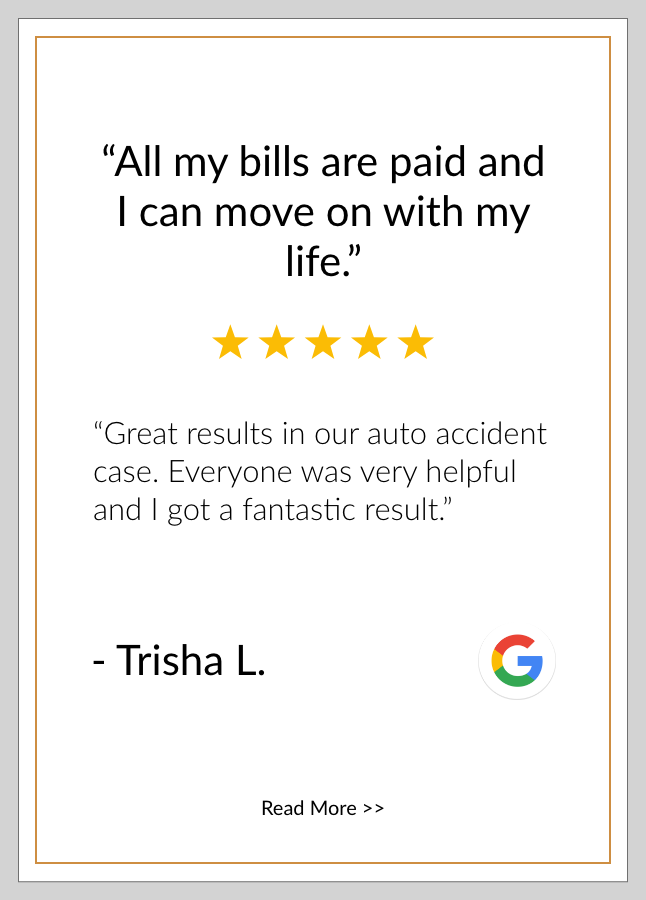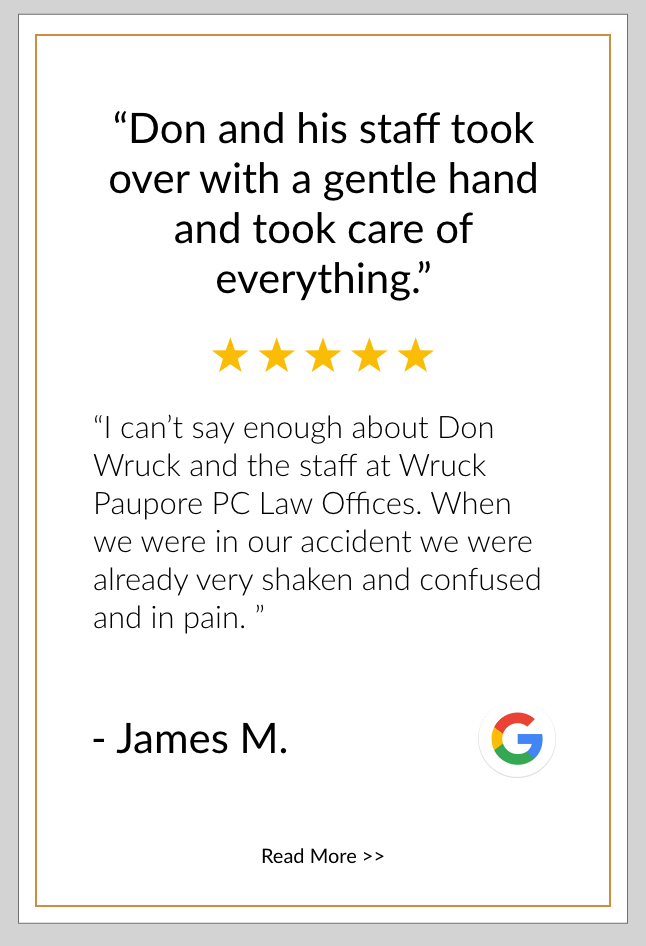








Out of 547 Reviews
After a car accident, it may be possible to sue the at-fault driver. If that driver were driving a company vehicle, the case may be a bit more complex. While you can still include the driver in your lawsuit, you may shift focus and sue their employer, too.
If an at-fault driver is driving a company car, their employer may be held vicariously liable for the accident. Including the company is a good idea, as it likely has more resources to pay for damages. If the at-fault driver is not an employee but an independent contractor, the rules of vicarious liability might not apply, and the company might push back on your claims. Even so, there may be other ways to sue the company, and your lawyer should help you.
Call our Indiana car accident lawyer at Wruck Paupore at (219) 322-1166 to request a confidential case review free of charge.
While you can still sue the driver who directly caused the accident, their employer might also be on the hook if they were driving a company vehicle.
Again, we can and likely still should include the driver in your case. Often, the employer’s liability hinges on the driver’s liability. Our Indiana car accident attorneys must prove that the driver was responsible for the accident if we are also to have their employer held responsible.
Since the at-fault driver was driving a company vehicle, the company they work for should be included in the lawsuit. The company may be held vicariously liable if the driver is an employee and was acting within the normal scope of their duties when the accident occurred.
Alternatively, the company may be directly liable if they knew the driver was unsafe or unfit to drive and put them on the road anyway.
Even if the driver was driving a company car, we may be able to include others in the lawsuit in addition to the driver and the company. If other drivers involved in the accident contributed to it somehow, they should be included.
A company or business may be vicariously liable for injuries caused by a negligent employee, but independent contractors are legally not considered employees.
If we learn that the at-fault driver was working as an independent contractor and was not actually employed by the company that owned the vehicle, it may be difficult to enforce vicarious liability laws.
A company is generally not responsible for injuries caused by a negligent independent contractor because the contractor does not work for them. The company is not the independent contractor’s employer but their client.
The company might argue that the driver is an independent contractor, but this might not be true. Companies frequently misclassify employees as independent contractors. This could be an error, or it could be done on purpose to avoid liability.
If we can prove that the driver was in fact an employee, we may convince the court to enforce vicarious liability laws.
Generally, an employee is someone who works under the direction and control of the company. An independent contractor works for themselves and controls their hours, salary, and method of work.
Even if the driver is an independent contractor and the company cannot be held vicariously liable, they may still be included in your lawsuit because the company owns the vehicle.
Generally, an injured victim may sue the driver and the vehicle’s owner. Even if the vehicle’s owner (i.e., the company) did not hire the driver as an employee, they may still be vicariously liable because they own the car.
Indiana recognizes special exceptions to the limits of vicarious liability when independent contractors are hired to engage in inherently dangerous activities.
If the driver was transporting hazardous materials, their work may be deemed inherently dangerous. This means they do not have to be company employees for the company to be held vicariously liable.
Generally, the company may be held responsible for an accident where the at-fault driver was operating a company car, and the company may be ordered to pay the damages. However, this may not hold true in every case, and companies may not be responsible for a driver’s unauthorized or criminal behavior.
Yes. We can sue the company that hired the driver who caused the accident if the driver was engaged in their normal course of work and acting within the scope of their employment.
We can also sue the company if they are directly responsible for the accident. For example, if the company provided the driver with a vehicle that had faulty brakes, the company can be held directly liable for the accident.
If the driver were an independent contractor, the company might not be held vicariously liable. Companies are not responsible for the actions of an independent contractor. The company is not their employer; it is their client.
However, vicariously liability might still apply if the driver was hired for some “inherently dangerous” work. Also, the company might still be held directly liable for various reasons.
If the company cannot be held vicariously liable, we may seek to hold them directly liable. For example, a company may be directly liable for negligent entrustment. If they hired an independent contractor knowing that they were unfit for the job and an accident was likely, they may be directly liable.
Call our Indianapolis, IN car accident lawyer with Wruck Paupore at (219) 322-1166 and ask for a confidential case review free of charge.
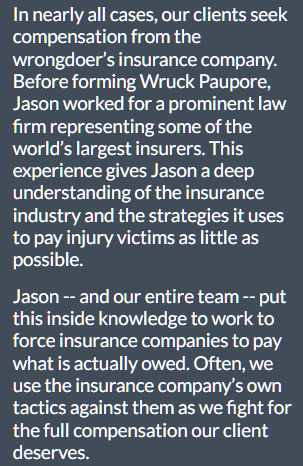
Don is a founding partner and one of the nation’s top-ranked personal injury litigators. He is a member of the Multi-million Dollar Advocates Forum, which includes less than 1% of the nation’s trial lawyers, and awarded the highest ranking given by Martindale Hubbel and AVVO.
More importantly, Don understands representing personal injury victims is about more than recovering the best settlement: it’s about helping clients get back on their feet and supporting them in every aspect of their recovery.
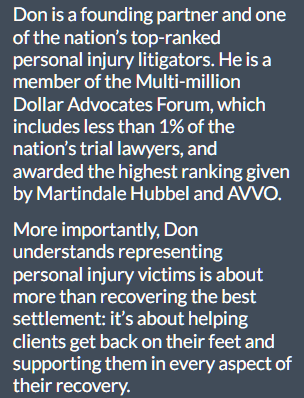
In nearly all cases, our clients seek compensation from the wrongdoer’s insurance company. Before forming Wruck Paupore, Jason worked for a prominent law firm representing some of the world’s largest insurers. This experience gives Jason a deep understanding of the insurance industry and the strategies it uses to pay injury victims as little as possible.
Jason -- and our entire team -- put this inside knowledge to work to force insurance companies to pay what is actually owed. Often, we use the insurance company’s own tactics against them as we fight for the full compensation our client deserves.
For more than four decades, Keith has been fighting for injury victims. During that time, he’s watched the insurance industry change, with insurers now more interested in protecting their stock price than treating injury victims fairly.
Since the beginning, Keith has put people first. From his childhood in Gary, Indiana during the 1960’s and working his way through law school, Keith has risen to become one of the Midwest’s most respected trial lawyers. He has never forgotten that being a lawyer is about helping people -- and seeing injury victims through struggles in a way that could change their lives forever.
Over the decades, Keith, Don and Jason have fought relentlessly for clients, even when other lawyers have said the case was impossible to win.















Contact Us:
Wruck Paupore P.C.
Injury Lawyers
275 Joliet St. Suite #250
Dyer, IN 46311

© 2026
Terms of Service | Privacy Policy | Resources | Blog | Sitemap

© 2022 Wruck Paupore PC
Terms of Service | Privacy Policy